Why the Best Homes on LA's Westside Sell Before They Hit Zillow
The difference between winning and missing out on the Westside usually comes down to one thing: information, and who has it first.
I've been selling homes in Los Angeles for 20 years, through three boom cycles, two crashes, and every tech platform that was supposed to "disrupt" my business. None of them did. What actually changed the game is something most buyers and sellers still don't fully grasp: the gap between what's public on Zillow and what's actually moving on the Westside is bigger than it's ever been.
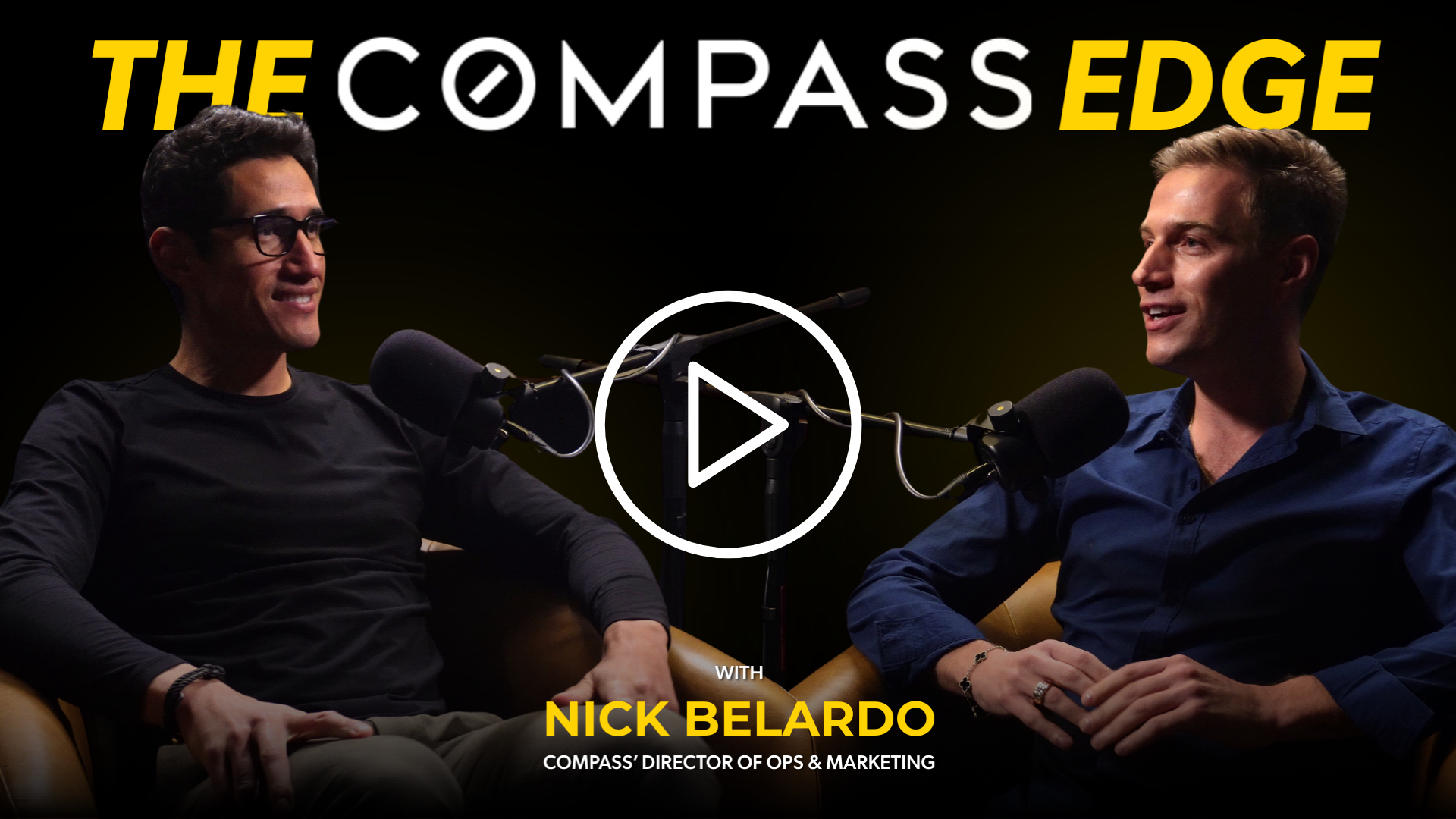
I recently sat down with Nick Belardo, Head of National Programming at Compass, for a behind-the-scenes look at how we're closing that gap, and what it means if you're trying to buy or sell in Brentwood, Santa Monica, Venice, Mar Vista, or Pacific Palisades.
The short version: if you're only watching the public listings, you're seeing opportunities after they've already built momentum. The real edge sits in the layer underneath.
Why Some Westside Homes Never Hit Zillow First
Roughly 15 to 20% of Westside transactions happen off-market or in a pre-market window, the home finds a buyer before it ever shows up as "active" where most people shop. That's especially true at higher price points, where privacy, timing, and audience curation matter more than mass visibility.
This is how the high-end market works. Sellers don't always want a public spectacle. Buyers don't always want to bid against the entire internet. And a strong agent network can match the two before the rest of the world knows the house is even being considered.
For a seller, that's a way to test pricing and gauge demand without burning days on market. For a buyer, it means the right agent can put you in front of homes you'd never find on Redfin. Compass built tools to close that gap.
What Is a Compass Private Exclusive?
A Compass Private Exclusive is a property listed privately within the Compass network, searchable by Compass agents and their clients, but not on the public portals. No Zillow, no Redfin, no MLS days-on-market clock running.
For sellers, it's a quiet, controlled environment to test interest, refine pricing, and even find a buyer entirely off the public market. For buyers, a Compass agent gives you eyes on properties most of your competition will never see. It's the first phase of our three-phase marketing strategy.
How the Three-Phase Marketing Strategy Works
Phase 1: Private Exclusive. The home is shown only inside the Compass network. We test the price and see who shows up, before the public clock starts. If feedback says we're high, we adjust. If feedback says we have a buyer now, we close. No days on market, no price-reduction history. Clean slate.
Phase 2: Coming Soon. The listing goes live on Compass.com, searchable by every consumer, but still not on the MLS. This builds public demand without exposing the seller to a full launch. The buyers who've been waiting see it first.
Phase 3: MLS launch. Now we go live everywhere, in Zillow, Redfin, the full rollout. The difference is we launch with momentum, not from zero. The price is pressure-tested, the demand is real, and every channel is firing from day one.
I've run this on multiple listings since joining Compass 1.5 years ago. On my first one, the Private Exclusive phase told us within 2 weeks we were priced too high. We adjusted before going public, came onto the market at the right number, generated competing interest, and closed over asking. None of that happens if we'd just put a sign in the yard and waited.
Better Pricing, Backed by Buyer Demand Data
One of the most powerful tools Nick walked through is the Compass Buyer Demand tool. Before we list, I can tell you exactly how many active buyers in the network have a saved search matching your home, your neighborhood, your price band.
At the kitchen table, that's the difference between an opinion and a fact: not "I think we should price at X," but "At X, here's how many active buyers are looking for this exact home, and at X minus 5 percent, here's how many more we unlock." On the Westside, that's the difference between selling in 14 days at the right number and sitting for 90 while you chase reductions.
Finding Westside Homes Before They List
For buyers, the key tools are Reverse Prospecting and Agent Network search.
Reverse Prospecting tells me, on a Private Exclusive, exactly which Compass agents have clients who've looked at it. I can call before going public and offer a serious buyer the chance to act early, and skip the bidding war.
Agent Network search lets me pull recent sales in any specific pocket, north of Montana, the Mar Vista hill, Brentwood Park, the Palisades alphabet streets, find the agents transacting there, and reach out in one batch to ask what's coming. What used to take an afternoon of one-by-one MLS searching now takes twenty minutes. The buyer benefits, and so does the seller on the other end of those calls.
What Is Compass Concierge?
Compass Concierge is one of the most under-used tools in our stack. Before listing, we identify the improvements that will most increase your sale price, such as paint, staging, decluttering, landscaping, minor repairs. Compass advances the funds interest-free, and the bill is repaid at closing from the proceeds.
Most sellers, even wealthy ones, don't want to write a five- or six-figure check before their home sells, even when the math favors it. Concierge removes that objection and gets the home to its highest-value condition before photos, showings, and pricing. The result is better photos, more interest, and almost always a higher final number. On the Westside, where presentation is everything, that's often the entire spread between asking and over-asking.
A Tool That Spots Future Sellers
There's a quieter tool running in the background too. Likely to Sell analyzes the contacts in my CRM and flags which homeowners are statistically most likely to sell in the coming months, based on signals the homeowner often hasn't fully processed themselves.
I've called clients flagged by Likely to Sell, people I hadn't spoken to in two years, and had them tell me on the first call that yes, their last kid graduates in June and they're leaving California. How did you know? I knew because the data knew. They don't need the mechanics. They just need to know I was thinking about them at the right moment.
Tech Doesn't Replace the Human
Here's what I want every buyer and seller to take from this: the tools don't replace your agent. They make a good agent dramatically more effective. They cut hours of admin out of every transaction, surface demand that used to be invisible, and turn pricing from an opinion into a defensible answer.
But none of it works without a human who knows how to use it. The Compass agents who actually work the platform are doing more for their clients in less time. The ones who don't, and there are still plenty, are leaving real money on the table for sellers and real opportunities on the table for buyers. When you're choosing an agent on the Westside in 2026, the question isn't whose name is on the sign. It's whether they actually know how to use the toolkit they have.
What This Means For You
If you're selling: how your home comes to market matters as much as the list price. A pre-market test phase, a data-driven price, a Concierge-funded prep budget, and a coordinated launch will beat "stick a sign in the yard and wait" almost every time, especially in the $3M-and-up tiers where I work.
If you're buying: don't shop only what's public. Tell your agent exactly what you want, make sure they have access to the off-market and pre-market layer, and let them run the network. The home that fits you may not be on the open market this week, and may never be.
The market hasn't gotten harder. It's gotten deeper. The people who win are the ones working in all of it.
Let’s Connect!
If you're thinking about buying or selling on the Westside, or just want to know what this means for your home, I'm happy to talk it through. Call or text me at 310-853-2643, or email info@paulsalazargroup.com.