Mortgage Watch: Rates Near 7.4%, but the Bond Market Finally Blinked
Mortgage rates rose for a seventh straight week, and the national 30-year fixed average reached 7.40% on October 8, its highest level since November 2023 (Freddie Mac). That is the headline most people saw. What fewer people saw is that the 10-year Treasury yield, which mortgage rates follow most closely, eased over the past week and the odds of another Fed hike this month dropped sharply. So this week is a mixed picture. Borrowing is expensive, but there is a little relief in the bond market, more homes on the market, and an inflation report on Wednesday that could push things either way. Here is what I am watching and what it means if you are thinking about buying or selling on the Westside.
This Week's Rates
The figures below come from a home purchase rate sheet dated October 9, 2026, from a private bank lender I work with. The monthly payments shown are principal and interest on a $1,000,000 loan, and they do not include property taxes or insurance. Your own rate will depend on your loan size, down payment, credit and the lender you use.
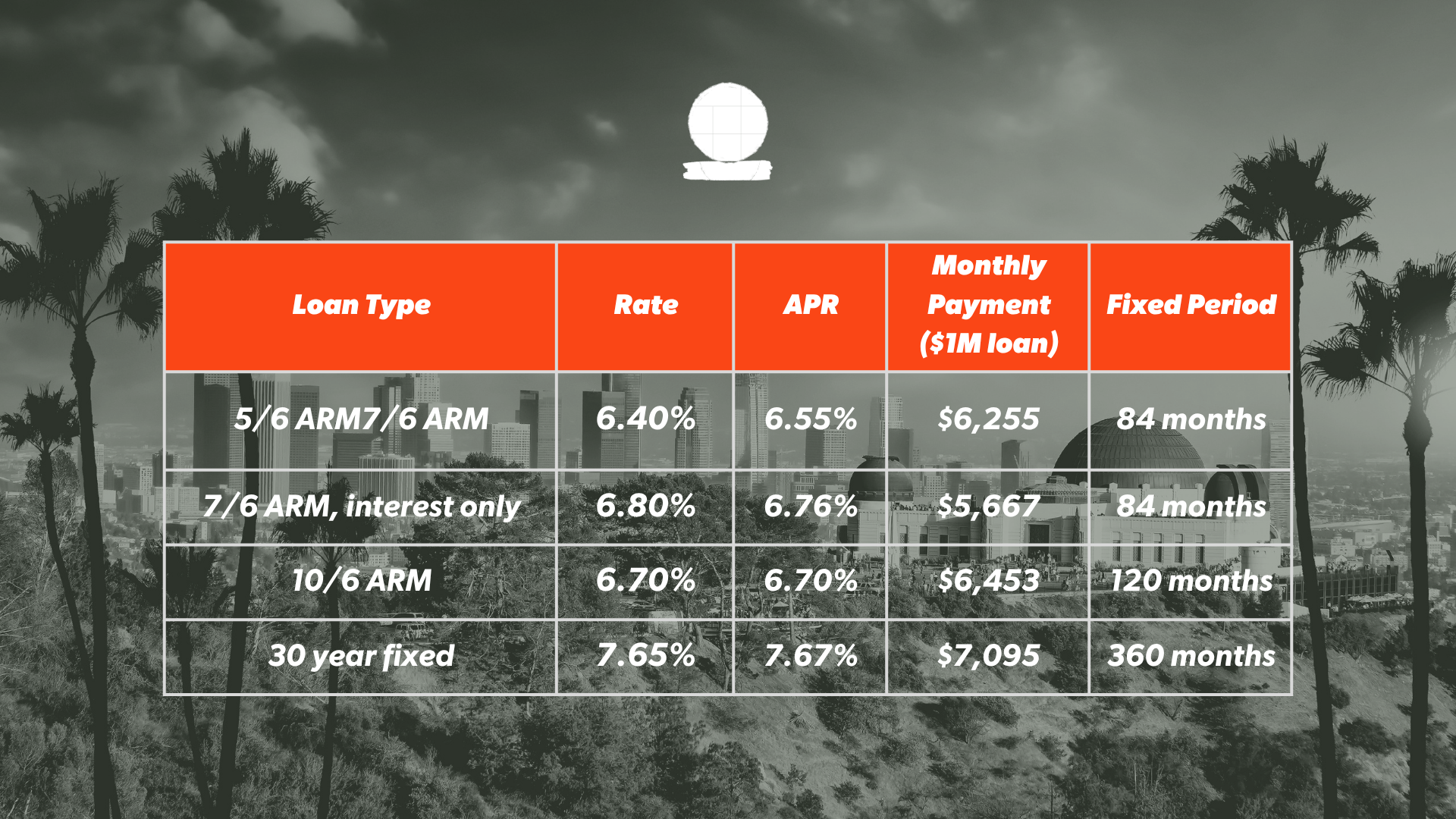
The biggest takeaway for me is the gap between fixed and adjustable. On this sheet, the 30-year fixed sits 1.25% above the 7/6 ARM, which is about $840 a month on every $1,000,000 borrowed. After the fixed period ends, ARM payments can change every 6 months, so that gap is something to talk through carefully with your lender rather than a reason on its own to pick one loan over another. For context, the national average 30-year fixed was 7.40% last week, up from 7.28% the week before and 6.30% a year ago (Freddie Mac). That survey tracks conforming loans, so it runs a bit lower than the jumbo loans most Westside purchases use.
What Moved Rates
Treasury yields eased. Mortgage rates track the 10-year Treasury yield more than anything the Fed does directly. After weeks of pressure, the 10-year slipped from roughly 5.35% to 5.19% over the past week, according to this week's lender market update, and it was trading at 5.19% Tuesday morning. That is still high, but it is the first real pullback in a while.
The odds of another Fed hike dropped. The Fed raised its benchmark rate in September, and a week ago many traders expected another increase at the October 27–28 meeting. After a softer September jobs report, futures markets put the chance of an October hike at about 17%, and prediction markets fell from almost 70% to 18% (CNBC). Markets are still leaning toward a hike in December.
Inflation is the next test. The September Consumer Price Index comes out Wednesday, October 14, at 8:30 a.m. Eastern. The lender update I received notes economists expect headline inflation around 3.6% to 3.7%, partly from higher energy prices. A cooler number could help yields keep easing, and a hotter one could undo this week's relief.
What It Means for Buyers
Here is what this week's rates look like on a few typical Westside purchases with 20% down. These are principal and interest only, using the rates on this week's sheet.
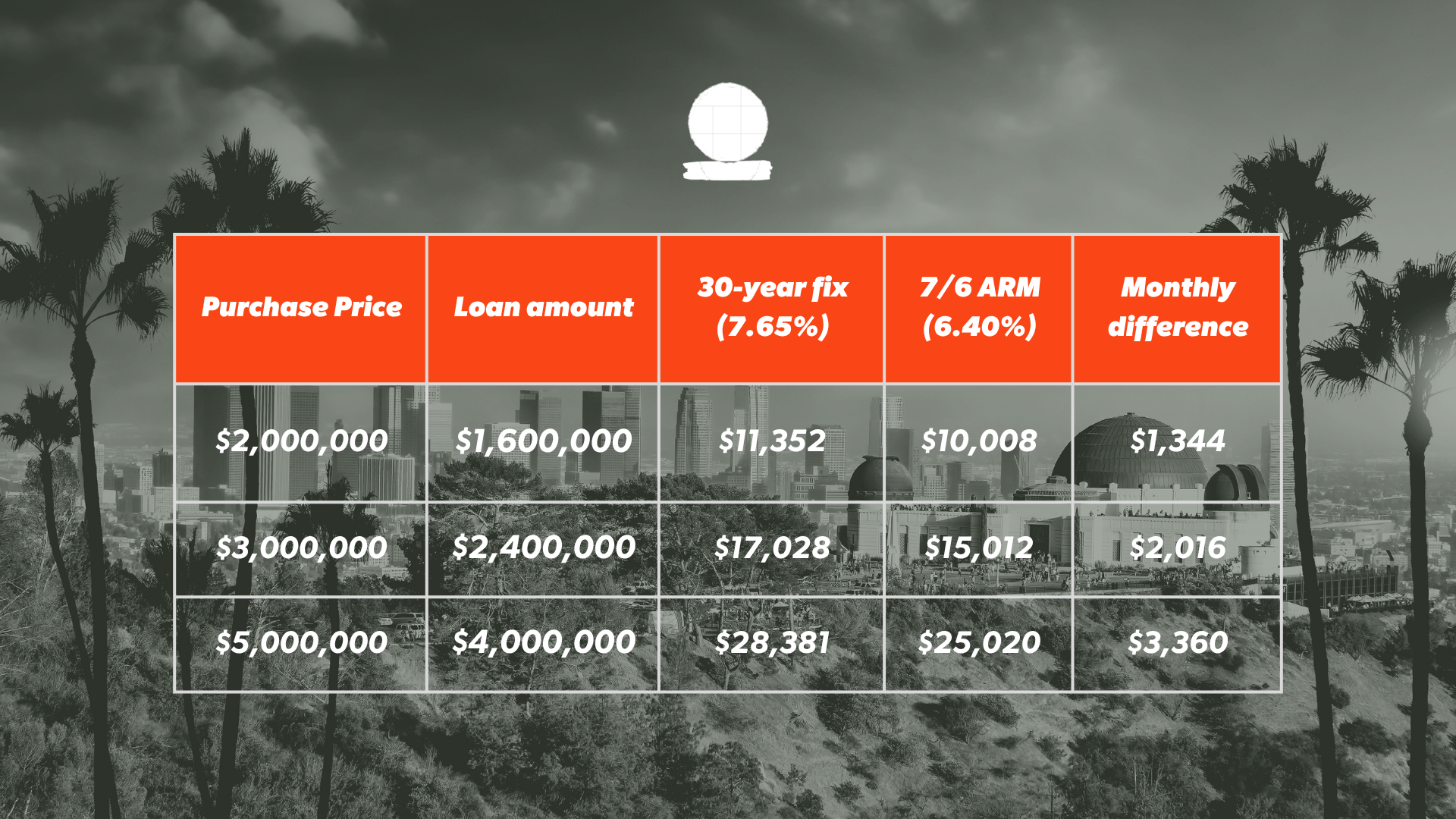
Higher rates are only half the story. Nationally, existing-home sales rose 1.5% in September, and inventory climbed to 1.6 million homes, the most since November 2019, which works out to a 4.8-month supply. NAR's chief economist said higher inventory and longer days on market are giving buyers more negotiating power (NAR).
That lines up with what I see. Buyers who are ready have more room right now to ask for a seller credit, which can go toward buying down the rate or covering closing costs, and to negotiate on price for homes that have been sitting. A clean pre-approval and the ability to close on time still carry real weight with sellers, especially when you are asking for something in return. On timing, I would not try to guess Wednesday's inflation number. If the right home comes along, the payment math and the negotiating room matter more than waiting for a perfect week.
What It Means for Sellers
With rates above 7%, fewer buyers qualify at the top of their range, and the ones who do are paying close attention to price. NAR's chief economist put it plainly this week, saying sellers need to be realistic about local conditions, which could mean price discounts or other incentives. Nationally, about 21% of listings cut their asking price in September, according to Realtor.com data.
For Westside sellers, that means pricing right from day one matters more than it did a year ago. A home priced to the current market draws the buyers who are active now, while an ambitious price tends to sit and invite a lower offer later.
It also means being open to a credit instead of a straight price cut. A seller credit toward a rate buydown can lower a buyer's monthly payment more than an equal price reduction would, which can keep your sale price stronger while still getting the deal done.
Frequently Asked Questions
What are mortgage rates right now in October 2026? The national average 30-year fixed rate was 7.40% as of October 8, 2026 (Freddie Mac). On the jumbo purchase rate sheet I reviewed dated October 9, the 30-year fixed was 7.65% and a 7/6 ARM was 6.40%. Your rate will depend on your loan and lender.
Why are mortgage rates so high right now? Mortgage rates follow the 10-year Treasury yield, which climbed above 5% this fall on inflation concerns and a Fed rate hike in September. The 10-year eased to about 5.19% this week (Wells Fargo Investment Institute).
Is it a good time to buy a home on the Westside? Rates are high, but inventory is the highest it has been since 2019 and buyers have more negotiating power (NAR). For buyers who are financially ready, that can mean better pricing and seller credits than a year ago.
Should I lower my price or offer a credit when selling? It depends on your home and your buyer pool. A credit toward a rate buydown can lower a buyer's payment more than an equal price cut, so it is worth comparing both with your agent before you adjust.
Will mortgage rates go down after the CPI report? No one knows for sure. A softer inflation reading on October 14 could help yields keep easing, while a hotter one could push rates back up.
Let's Talk
If you are buying, I am happy to walk through what your budget covers at today's rates and where there is room to negotiate a credit. If you are selling, I can give you a straight read on pricing and what buyers are asking for right now. Call or text 310-853-2643 or email info@paulsalazargroup.com.
Paul Salazar is a licensed real estate agent, not a mortgage lender. Rates and payments shown are for information only, are based on a lender rate sheet dated October 9, 2026, and will vary by borrower, loan size and lender. Please consult a licensed mortgage professional for a personal quote.